

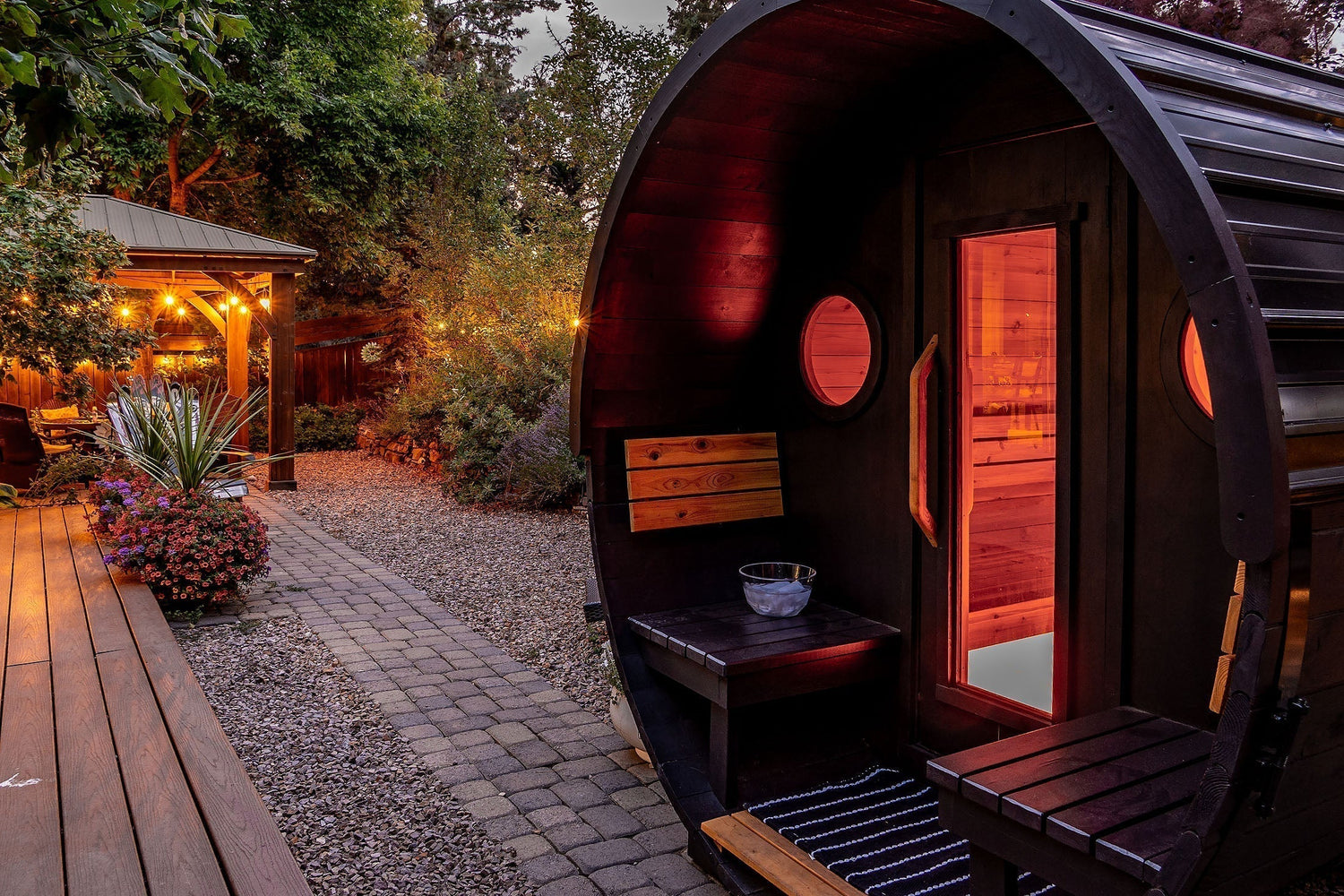
There’s a point where a backyard stops being something you look at and starts becoming something you use.
That shift doesn’t come from more square footage. It comes from intention.
A well-designed backyard retreat gives you a reason to step outside every day. Not for a project. Not for maintenance. For a reset.
And the combination that keeps showing up across Oregon homes is simple:
Heat. Cold. Transition Space.
A sauna, a cold plunge, and a place to sit in between.

Start With the Anchor: The Sauna
Every backyard retreat needs a focal point.
In most cases, that’s the sauna.
A cedar barrel sauna works particularly well in Oregon because it:
- Handles weather naturally
- Heats efficiently
- Blends into outdoor environments
- Doesn’t require heavy structural integration
The goal isn’t to hide it. It’s to place it where it feels intentional.
Common placements include:
- Edge of a patio
- Slightly offset in the yard
- Near tree lines or natural borders
- With a view, if possible
Add Contrast: The Cold Plunge
The cold plunge doesn’t need to be complicated or oversized.
It just needs to be accessible.
Place it:
- Within a few steps of the sauna
- On stable, level ground
- With enough clearance for safe entry and exit
The closer it is, the more likely it gets used.
That proximity turns a simple sauna session into a full contrast therapy experience.
Create the Transition Zone
This is the most overlooked part of a backyard setup.
Between heat and cold, you need space to pause.
That might be:
- A bench
- Adirondack chairs
- A small deck platform
- Gravel with simple seating
This is where:
- Your breathing settles
- Your body recalibrates
- The experience becomes more than just heat exposure
Without this space, the setup feels incomplete.
Bring in Fire… or Water
Once the core setup is in place, adding a secondary element changes how the space gets used.
Not for function, but for atmosphere.
A fire pit or hot tub creates a natural place to land between rounds or after you’re done.
A fire pit:
- Extends usability into colder months
- Creates a natural gathering point
- Adds warmth and light at night
A hot tub:
- Offers a gentler contrast option for those who don’t want full cold immersion
- Encourages longer, more relaxed sessions
- Expands the space beyond strict “routine” use
In Central Oregon, where evenings cool off quickly, one of these elements makes a big difference.
It shifts the space from a simple wellness setup to somewhere people actually want to spend time.
Design for Real Use, Not Perfection
A backyard retreat doesn’t need to look like a magazine.
It needs to work on a random Tuesday.
That means:
- Easy access from the house
- Minimal setup required
- Durable materials
- Lighting that works at night
- Privacy where it matters
If it’s too precious, it won’t get used.
Privacy Without Isolation
You don’t need full enclosure.
But you do want separation.
Options include:
- Fence sections
- Slatted wood screens
- Landscaping such as trees or grasses
- Strategic orientation of the sauna and seating area
The goal is to feel comfortable, not exposed.
Lighting Matters More Than You Think
Most sauna use happens:
- Early morning
- Evening
- Winter
Lighting should be:
- Warm, not harsh white
- Low-profile
- Functional but subtle
Think:
- Path lights
- Soft overhead string lighting
- Indirect glow near seating
Good lighting makes the space feel finished.
Materials That Work in Oregon
Stick with materials that:
- Age well outdoors
- Require minimal maintenance
- Feel natural in the landscape
Good pairings include:
- Cedar
- Stone
- Gravel
- Steel accents
- Concrete pads
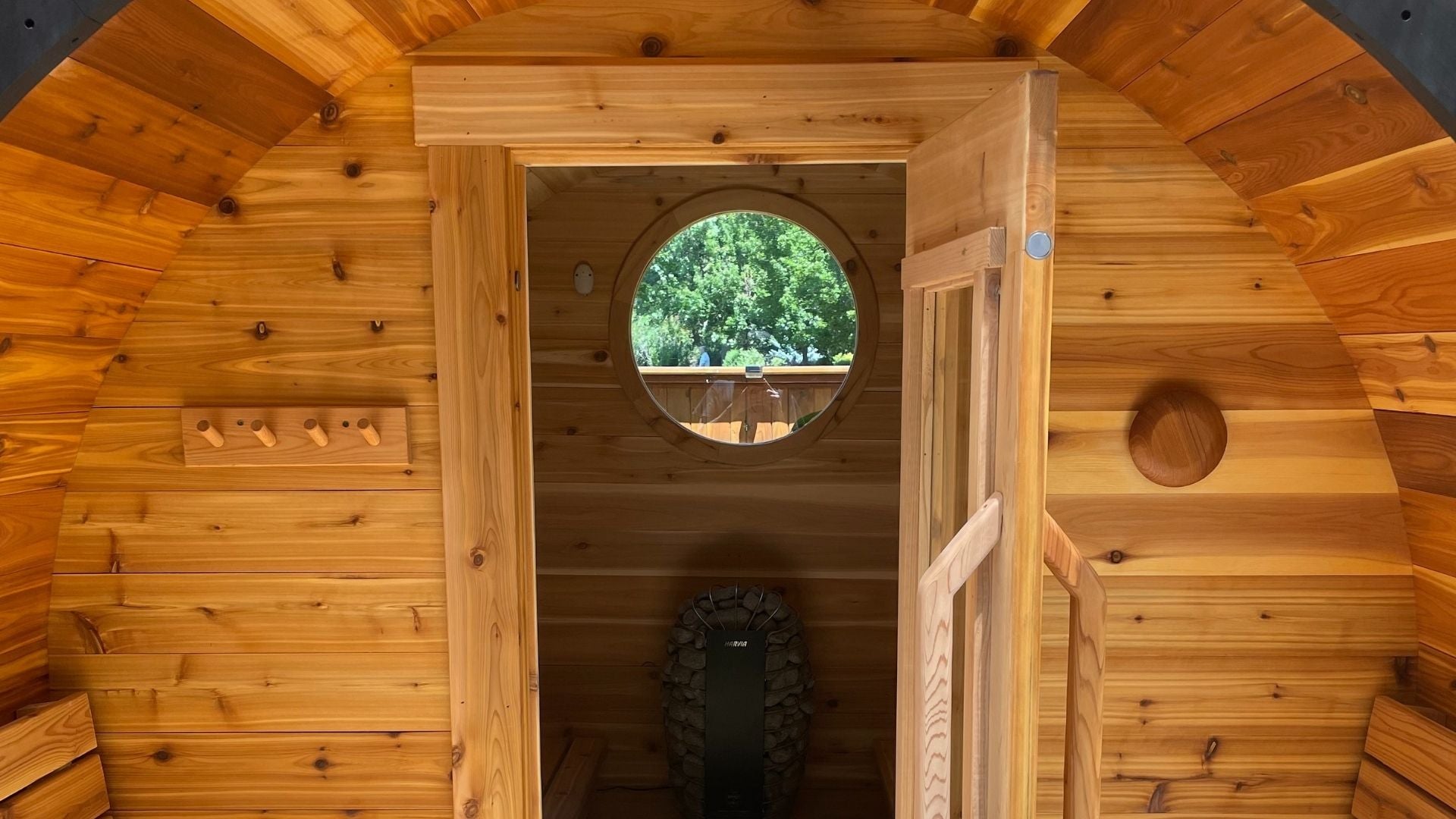
Cedar remains the preferred material for outdoor saunas due to its durability and natural resistance to the elements. Avoid anything that feels overly synthetic or fragile.
Small Spaces Still Work
You don’t need a massive yard.
A functional setup can fit in:
- A side yard
- A compact backyard
- A corner of a larger space
It’s about layout, not scale.
Why This Works
If you're just starting to think about building a space like this, it doesn’t need to be complicated. It needs to be usable.
A backyard setup works because it removes the friction that usually gets in the way.
No drive across town.
No scheduling around someone else.
No crowded or shared space.
Instead, it becomes part of your normal routine:
- Step outside
- Heat up
- Cool down
- Reset
That simplicity is what makes it stick.
In Central Oregon especially, where people are already coming home from skiing, riding, or long days outside, having everything a few steps away turns recovery into something you actually do, not something you plan and skip.
That’s the difference between intention and habit.
FAQ
Do I need a large yard for a sauna setup?
No. Many setups work in compact spaces with thoughtful placement.
How close should the plunge be to the sauna?
Within a few steps is ideal for convenience, safety, and consistent use.
Do I need a fire pit or hot tub?
Not necessarily, but either one can make the space more comfortable, social, and usable year-round.


Leave a comment
This site is protected by hCaptcha and the hCaptcha Privacy Policy and Terms of Service apply.